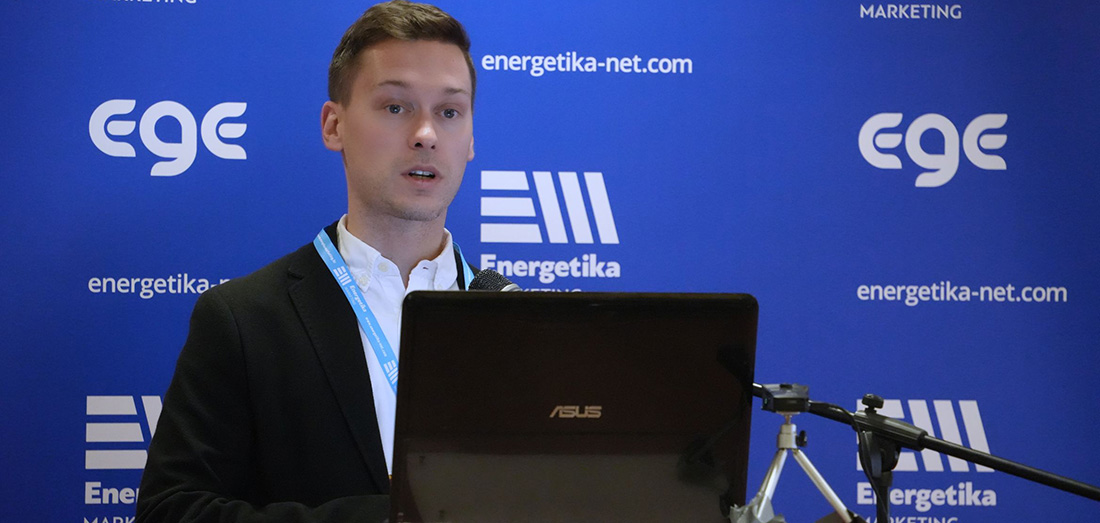
Presentation of the PLIGES Project at the Seminar on Renewable Energy Sources - ENERGY FROH THE DEPTHS (video)
The Mapping of Shallow Geothermal Systems in the Republic of Croatia (PLIGES) project is the first comprehensive survey of installed shallow geothermal energy systems in Croatia. At the moment, there is no systematic monitoring or control of installed heat pump systems that use a shallow geothermal energy source in Croatia. Therefore, it is impossible to estimate the total installed capacity and consumption of energy coming from shallow geothermal energy sources. The interdisciplinary project team consists of experts from two scientific and educational institutions (the Faculty of Mechanical Engineering and Naval Architecture and the Faculty of Mining, Geology and Petroleum Engineering of the University of Zagreb) and one company with experience in designing and supervising the execution of such systems (TT Inženjering).
The project team from FSB, which is also the project holder, is in charge of collecting and processing data of the heating system and creating an interactive GIS map, the project team of partners from RGN is in charge of collecting and processing data about the derived systems in the ground for direct or indirect utilization of renewable energy from the ground, while members of the project team of partners from the company TT inženjering are in charge of data related to the functionality and technical condition of the implemented systems.
As part of the project activities, it is planned to establish databases and create an interactive GIS map that will enable viewing, visualization, input and monitoring of all data sets related to shallow geothermal energy sources in Croatia. Information and visibility activities are planned, in addition to the goals and results of the project, to inform target groups (scientific and professional public, state and local public institutions, youth educational groups, general public) about the importance of shallow geothermal energy and heat pumps in achieving carbon neutrality. This includes the advantages and limitations of using the technology, following good engineering practice in design and implementation, and examples of implemented systems.
The project lasts 15 months and is financed by Iceland, Liechtenstein and Norway using the Financial Mechanism of the European Economic Area (EEA) for the period 2014 - 2021 within the framework of the implementation of the 'Energy and Climate Change' Programme.
